MEDISCAN
One network that reads both bone X‑rays and chest X‑rays: it flags fractures and names the chest condition from a single upload.
- Client
- Clark University capstone
- Duration
- 3 months
- Stack
- Python, PyTorch, OpenCV, scikit‑learn, Streamlit
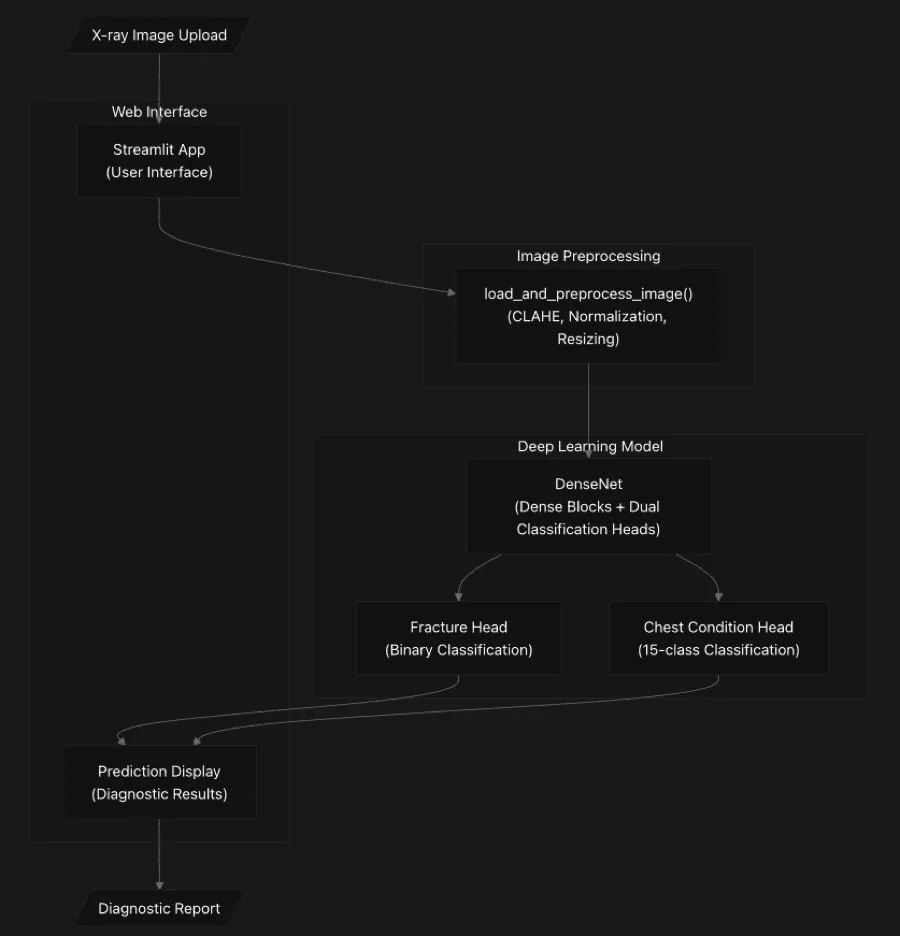
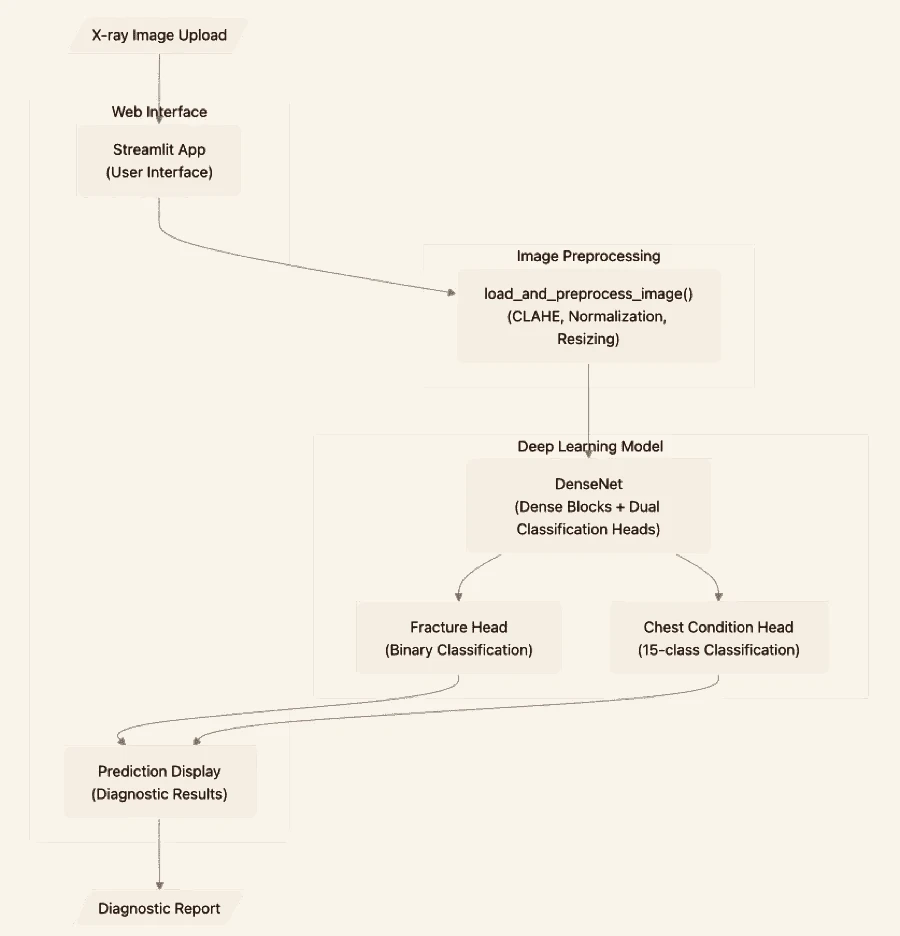
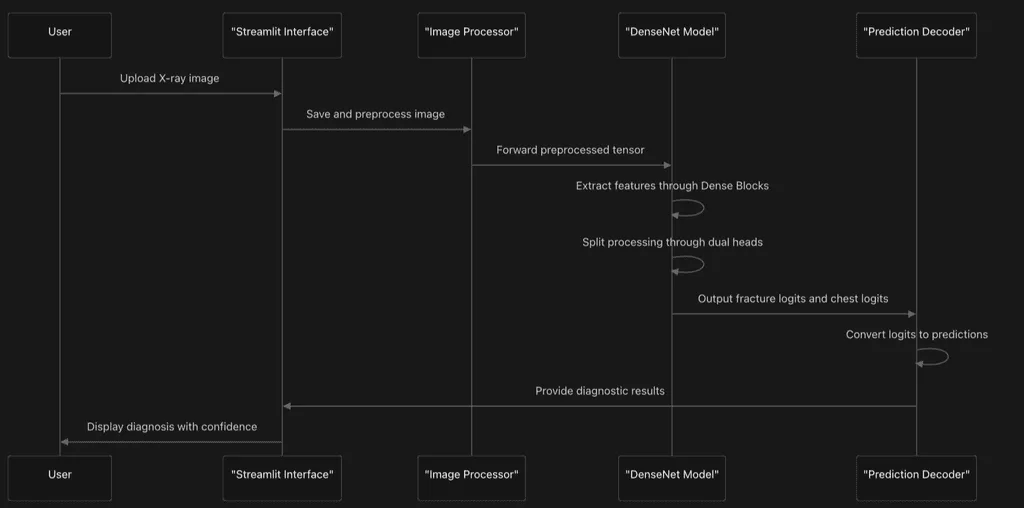
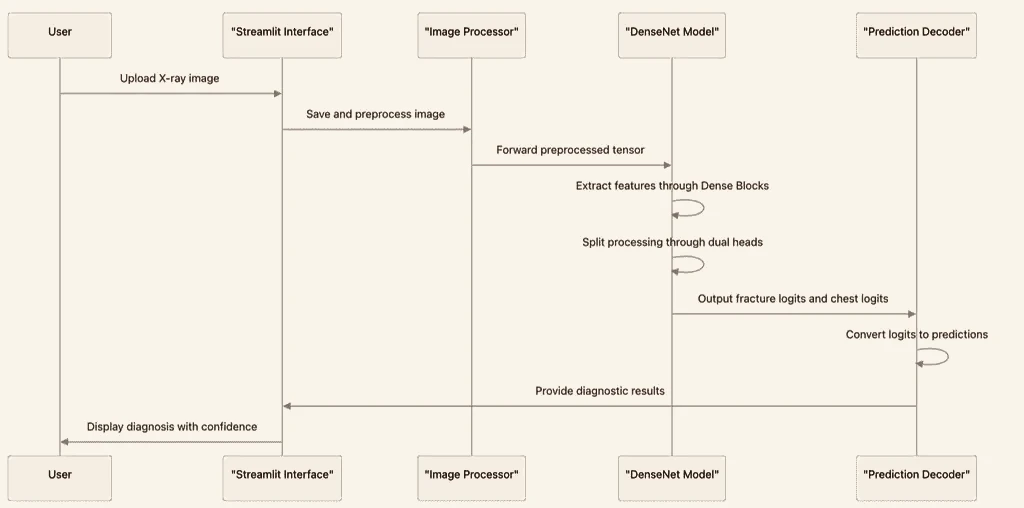
MEDISCAN is a dual task diagnosis aid. A DenseNet written from scratch shares one feature extractor between two heads: a fracture detector for bone X‑rays and a 15 class chest condition classifier for chest X‑rays.
On the held out test set the fracture head reached 98.1% accuracy (F1 0.961) and the chest head 70.5% accuracy. A Streamlit app wraps it so anyone can upload a scan and read the result with its confidence.
How it works
Clean every scan the same way
Grayscale load, CLAHE contrast enhancement, an aspect preserving resize padded to 224 by 224, and pixel values scaled to 0 to 1. Fracture images are augmented five ways to balance the classes.
Train one network on two tasks
Each batch is half fracture images and half chest images, with "No Finding" chest cases held to a quarter of the chest half so the model cannot coast on the most common label.
Show the answer
The Streamlit app runs one forward pass, then reports either the fracture verdict or the top three chest conditions with percentages, on CPU or Apple Silicon.